Forecasting how weather impacts the national solar power production
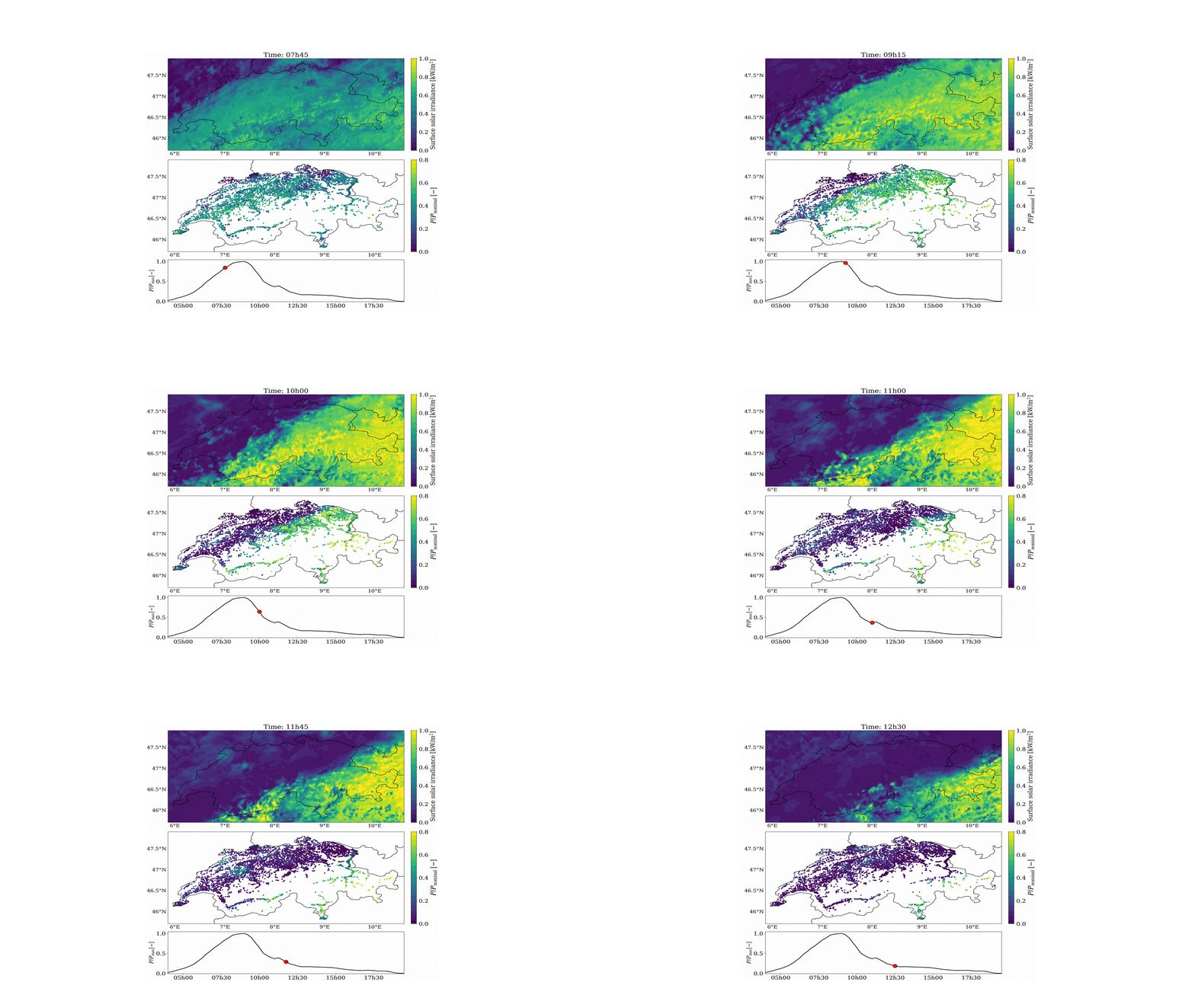
For optimising the energy grid, it’s important to know in time how much sunlight is reaching large solar farms. With a new method based on satellite images, weather models and deep learning, we can now produce spatiotemporal solar power forecasting. This research was led by L. Lanzilao from Energy Weather & AI Lab. Read more here.
A crystal ball for solar energy
The new method includes a prediction of appearing clouds and the amount of radiation being blocked. “Knowing beforehand how much solar energy will be generated can improve short-term power production planning of additional power sources. You can act strategically when there are surpluses or shortages of energy and reduce electricity costs. It’s also highly relevant for keeping the energy grid in balance,” says Angela Meyer, Assistant Professor of Energy Meteorology and Artificial Intelligence at TU Delft.
Knowing how much radiation clouds block
Meyer developed the method together with Luca Lanzilao (Bern University of Applied Sciences). In their research, they used more than 6,000 photovoltaic power plants in Switzerland to create a probabilistic spatiotemporal forecast of national-scale solar‑energy production.
The method is based on satellite images that show cloud cover. By combining these images with the exact locations of the photovoltaic power plants, it becomes clear how much solar radiation reaches the panels.
Now and in the coming hours
The innovation lies in the advanced underlying model. Thanks to artificial intelligence, the model can predict how cloud fields will develop. Will they linger above the panels? How much radiation will they let through? Meyer is pleased with the results: “We can determine, site by site, how much solar energy is being generated now and in the coming hours.”
Keeping energy levels stable
Supply and demand on the energy grid must remain in balance to maintain the correct frequency. This is especially challenging with the increasing share of renewable solar or wind energy, as their output can vary throughout the day. If grid operators don’t intervene, the frequency can fluctuate too much, potentially causing power outages. So when less is generated than expected, there is a need to purchase energy or produce extra from other sources, like gas power plants.
Affordable energy
The new method is publicly accessible for everyone, including companies. For Meyer, this is an important contribution of her scientific work. “If energy companies know what will be generated, costs can be reduced because they don’t have to take ad‑hoc measures to keep the system balanced. I believe public organisations have an important role in protecting consumers, so they don’t end up paying unnecessarily high prices for their energy.”
[This article comes from TU Delft News]


